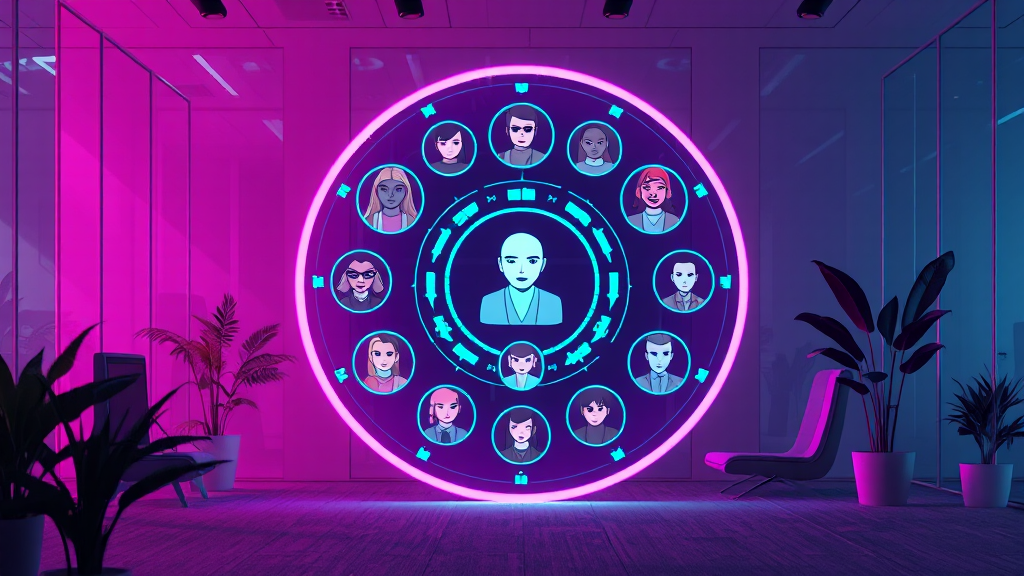
CrushOn AI: A Practical Guide to Custom AI Companionship
Conversational AI has moved far beyond simple question-and-answer tools. A growing category of platforms now focuses on open-ended, character-driven interaction where users shape who they talk to and how the relationship develops. CrushOn AI sits squarely in this space, offering customizable AI companions and unrestricted chat experiences for adults. This guide explains what the platform does, how its features work, and what to consider before diving in.
What CrushOn AI Actually Is
CrushOn AI is a web-based platform built around interactive AI characters. Instead of chatting with a single generic assistant, users browse a library of personas created by the community and by the platform itself. Each character comes with its own personality, backstory, speaking style, and visual identity. You can start a conversation with an existing character in seconds, or build one from scratch if you have a specific scenario in mind.
The platform is designed for adults and places few of the conversational guardrails found on mainstream AI assistants. That openness is the core of its appeal: users are not constantly redirected, lectured, or cut off mid-scene. The result feels less like querying a search engine and more like texting someone who stays in character.
How the Character Creation Process Works
The most interesting part of the platform is the creation toolkit. When you build a character, you are essentially defining a persona through a series of structured fields. These typically include:
Name and greeting. The opening message sets the tone for every conversation that follows. A strong greeting establishes voice, mood, and the immediate situation.
Personality description. This is where you describe temperament, habits, quirks, and emotional tendencies. Specific details work better than broad labels. “Sarcastic but secretly sentimental” gives the model more to work with than “nice.”
Scenario and setting. Defining where the conversation takes place helps the AI stay grounded. A coffee shop, a spaceship, or a quiet apartment all produce different dynamics.
Example dialogue. Providing sample exchanges teaches the model your preferred rhythm, vocabulary, and level of formality.
Visual appearance. Character images and avatars round out the experience, and many users treat this as part of the creative process rather than an afterthought.
Once saved, a character can be reused indefinitely, refined over time, or shared with the wider community. That sharing culture is a major reason the library keeps growing.
Why Users Choose Character-Driven AI
There are several practical reasons people gravitate toward this style of interaction. For writers, it is a low-pressure way to test dialogue and develop character voices. For language learners, it provides patient, judgment-free conversation practice. For anyone who simply enjoys creative roleplay, it offers a space to explore stories that would be awkward or impossible to stage elsewhere.
There is also a social dimension. Some users find it easier to open up to an AI that never gets tired, never loses patience, and never shares what was said. That sense of privacy and consistency is a meaningful part of the appeal, even for people who have no trouble forming real-world relationships.
It helps to be honest about what this is. An AI companion is not a replacement for human connection, and treating it as one tends to lead to disappointment. Framed as entertainment, a creative tool, or a safe space for experimentation, it works very well.
Getting Better Results From Conversations
Quality of output depends heavily on quality of input. A few habits make a noticeable difference:
Write in specifics. Vague prompts produce vague replies. Describing a mood, a location, or a recent event gives the model something concrete to respond to.
Stay in character yourself. If you break the fourth wall and ask the AI to “act like” something, the illusion weakens. If you respond as a participant in the scene, the conversation stays coherent much longer.
Use the memory and context features. Longer conversations benefit from persistent context. Reminding the character of relevant details, or relying on built-in memory, keeps the narrative consistent across sessions.
Iterate on your character cards. If a persona keeps drifting, the fix is usually in the definition. Tighten the personality description, add example dialogue, and adjust the scenario.
Take breaks. Long sessions can blur the line between creative play and passive scrolling. Stepping away and returning with a clear idea produces better conversations than chatting on autopilot.
Privacy, Safety, and Responsible Use
Any platform built around personal, sometimes intimate conversation raises legitimate privacy questions. Before committing time and personal details, it is worth reviewing how a service handles data, what it stores, and what controls users have over deletion. Reading the terms of service and privacy policy is not glamorous, but it is the responsible move.
Age verification matters too. These platforms are intended for adults, and the content is not designed for younger audiences. Parents and guardians should be aware that unrestricted AI chat tools exist and that they are easy to find.
It is also worth thinking about balance. Creative roleplay can be genuinely enjoyable and even therapeutic for some people, but it should not crowd out sleep, work, or real relationships. Used deliberately, it is a hobby. Used compulsively, it becomes a problem. The difference is usually intention and time management.
How CrushOn AI Compares to Other Platforms
The AI companion market has several well-known names, and each takes a slightly different approach. Some prioritize polished, general-purpose assistants with strict content filters. Others focus on roleplay communities and shared character libraries. CrushOn AI leans toward the latter: a broad character ecosystem, flexible creation tools, and fewer restrictions on where a conversation can go.
That positioning comes with trade-offs. Fewer restrictions mean more creative freedom, but also more responsibility on the user to decide what is appropriate. Platforms with heavier moderation are easier to hand to a casual user; platforms with lighter moderation reward users who know what they want.
For people who value customization and continuity, the character-card model is a strong fit. For people who just want quick answers to factual questions, a general assistant will usually be more efficient. Matching the tool to the task is the real decision.
The Broader Shift Toward Personalized AI
CrushOn AI is part of a wider trend. As language models become cheaper to run and easier to fine-tune, personalization is moving from a premium feature to a baseline expectation. Users increasingly want AI that remembers their preferences, adapts to their tone, and fits into a specific context rather than resetting every session.
That shift raises interesting questions. How much should an AI remember? Who owns a conversation once it ends? What happens when a character becomes emotionally significant to its user? These are not hypothetical concerns; they are already shaping how platforms design their features and how researchers study human-AI interaction.
For now, the practical takeaway is simple. Tools like this are most useful when approached with curiosity and clear boundaries. Treat them as creative instruments, not as substitutes for the people in your life, and they can be genuinely rewarding.
FAQ
Is CrushOn AI free to use?
The platform offers free access with limitations, and paid tiers unlock additional features such as higher message limits and enhanced capabilities. Checking the current pricing page is the best way to see what each plan includes, since offerings change over time.
Do I need technical skills to create a character?
No. Character creation is form-based. If you can fill out a profile and write a short description, you can build a working persona. More detailed character cards do produce better conversations, but there is no coding involved.
Can I keep my conversations private?
Privacy depends on the platform’s current policies and settings. Review the privacy documentation carefully, adjust any available visibility options, and avoid sharing sensitive personal information such as financial details or government identifiers in any chat.
Is the content appropriate for all audiences?
No. The platform is designed for adults and includes unrestricted conversational content. It is not intended for minors, and parents should be aware that similar tools are widely accessible online.
What makes character-driven chat different from a standard AI assistant?
A standard assistant optimizes for accurate answers. A character-driven platform optimizes for immersive interaction: consistent personality, ongoing narrative, and emotional tone. The two serve different purposes, and many users rely on both for different tasks.
Final Thoughts
CrushOn AI occupies an interesting corner of the AI landscape. It is part creative sandbox, part entertainment platform, and part social experiment. The character creation tools are flexible enough to support serious writing projects, while the community library makes it easy to jump in without building anything yourself. As with any powerful tool, the experience depends on how you use it. Approach it with clear expectations, sensible privacy habits, and a bit of curiosity, and it can be a genuinely engaging way to explore what conversational AI can do.
Readers who are interested in this topic will benefit from exploring multiple perspectives and understanding the nuanced approaches that industry leaders recommend. Taking time to research thoroughly ensures better outcomes and more informed decision-making.
Those looking to gain deeper knowledge in this area should consider following expert analysis, staying updated with the latest developments, and engaging with professional communities where these topics are discussed in detail.
A comprehensive understanding of this subject requires looking at both theoretical foundations and practical applications. By combining study with hands-on experience, learners can develop a well-rounded perspective that serves them well in real-world scenarios.
As the landscape continues to shift and evolve, staying informed about emerging trends and best practices becomes increasingly valuable. This ensures you remain competitive and capable of adapting to new challenges as they arise.